Disclosure: As an Amazon Associate, HomeCharging.org earns from qualifying purchases. We link to current listings instead of printing prices, and we did not lab-test these chargers.
If you can add a 60 A circuit, a 48 A charger like the Emporia or Wallbox Pulsar Plus covers most drivers. If your panel only allows 50 A, the 40 A Grizzl-E Classic fits. Tesla-port cars can use the Tesla Wall Connector, and the ChargePoint Home Flex has the most headroom at 50 A.
Comparison table
| Charger | Max A | Output | Circuit | Cord | Wi-Fi | Best for |
|---|---|---|---|---|---|---|
| ChargePoint Home Flex | 50 A | 12 kW | 70 A | 18 ft | Yes | Highest output in this list |
| Emporia Level 2 EV Charger | 48 A | 11.52 kW | 60 A | 25 ft | Yes | Longest cord in this list |
| Tesla Wall Connector | 48 A | 11.52 kW | 60 A | 22 ft | Yes | For Tesla-connector cars |
| Wallbox Pulsar Plus | 48 A | 11.52 kW | 60 A | 24 ft | Yes | Compact networked option |
| Grizzl-E Classic | 40 A | 9.6 kW | 50 A | 24 ft | No | No app, no account |
How to choose a Level 2 charger
The U.S. DOT puts Level 2 at about 10–20 miles of range per hour on 208–240 V, versus 2–5 miles for a 120 V Level 1 outlet (DOT). Within Level 2, four specs decide the right unit.
1. Amps: set by your circuit, capped by your car
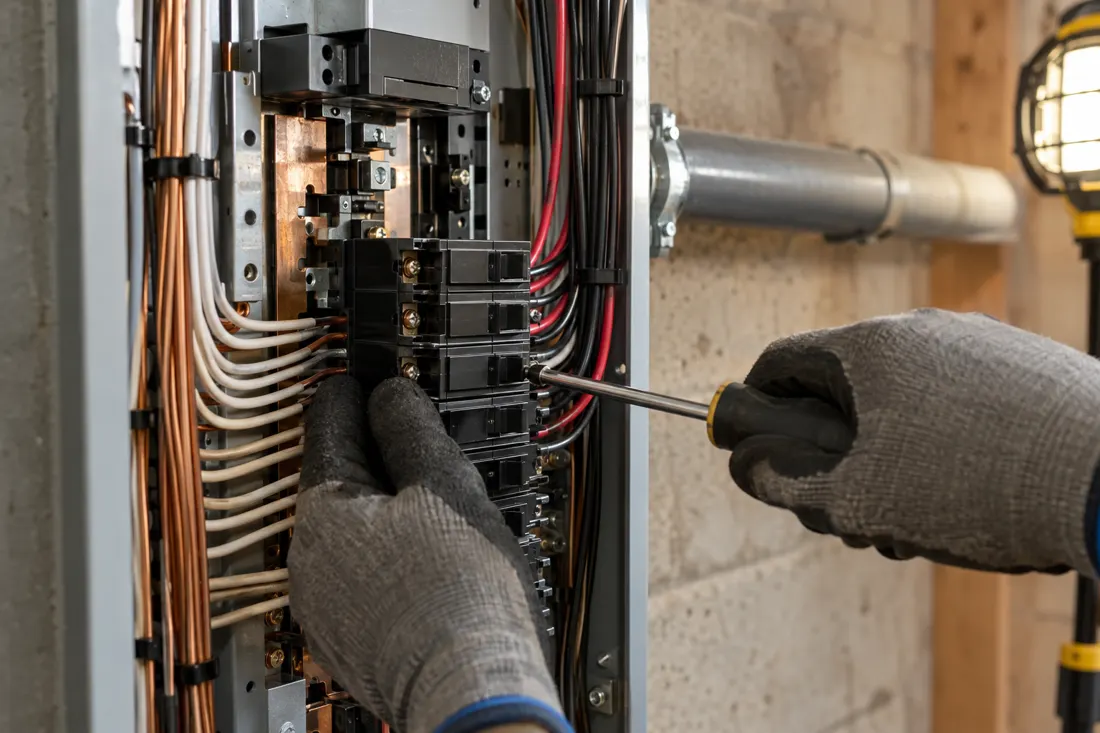
EV charging is a continuous load, so the circuit is sized at 125% of the charger's current: 32 A needs 40 A, 40 A needs 50 A and 48 A needs 60 A (NEC Art. 625 summary). When the math lands between sizes, such as 62.5 A for a 50 A charger, it rounds up to the next standard breaker, 70 A (Home Depot install guide). Your car's onboard charger also has a maximum AC rate, so check it before paying for amps you can't use.
2. Cord length: measure, don't guess
The five chargers here range from 18 to 25 ft. Measure from the mounting spot to your charge port, including the walk around the bumper, and add slack.
3. Plug-in or hardwired
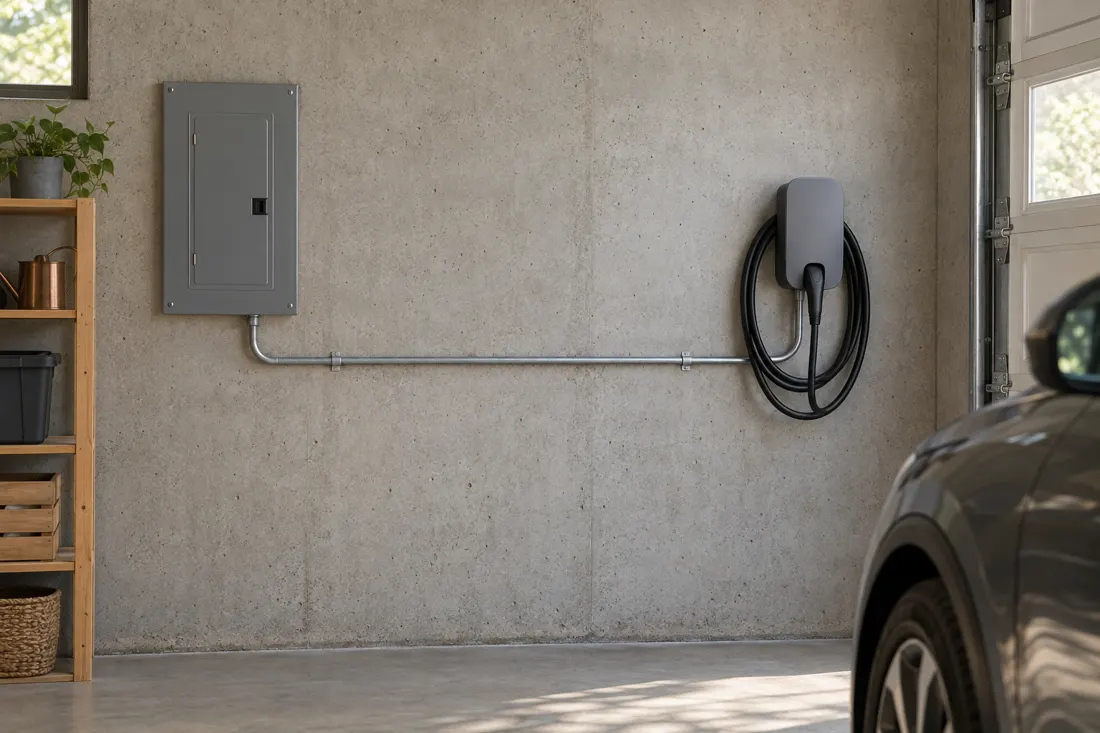
Plug-in units use a 240 V receptacle; hardwired units connect directly to the circuit. See the installation guide for the trade-offs.
4. Certification
ENERGY STAR certified chargers are safety-tested by a nationally recognized lab and use 40% less energy in standby (ENERGY STAR). Every model below is on the certified list.
Wi-Fi or not: when a smart charger pays off
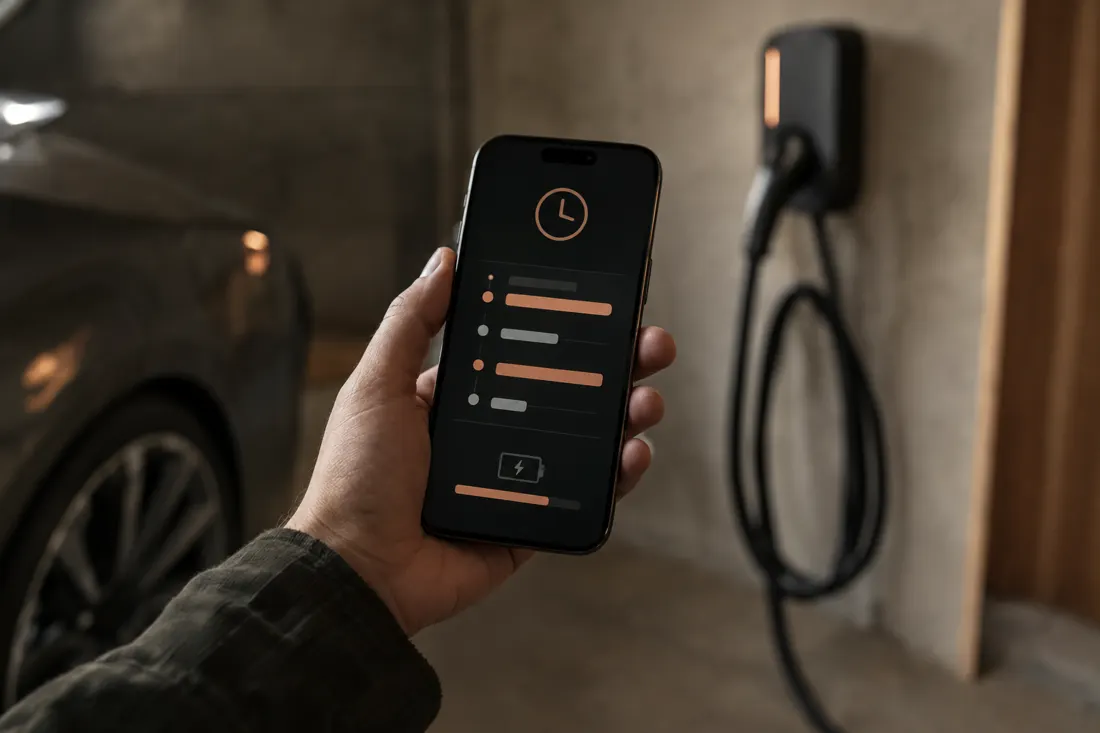
ENERGY STAR notes connected models allow remote monitoring and control and may qualify for utility bill-savings programs (ENERGY STAR). Check your utility's EV page before buying. If it pays for managed charging, a networked charger can earn its cost back. If not, car-side scheduling does the job.
The five chargers
ChargePoint Home Flex
Check price on Amazon- Max current
- 50 A
- Output
- 12 kW
- Circuit
- 70 A
- Cord
- 18 ft
Good fit if: You can add a 70 A circuit for its full 50 A output and want the most headroom for a future EV.
From the spec sheet
- Highest certified output here: 50 A / 12 kW
- Networked, so it can work with app scheduling and utility programs that support it
Check before you buy
- 18 ft cord is the shortest in this list; measure from the wall to your charge port
- Several CPF50 variants exist; match the model number to the ENERGY STAR listing
Certified model CPF50 · ENERGY STAR listing
Emporia Level 2 EV Charger
Check price on Amazon- Max current
- 48 A
- Output
- 11.52 kW
- Circuit
- 60 A
- Cord
- 25 ft
Good fit if: Your parking spot is far from the wall, or two cars swap the same spot.
From the spec sheet
- 25 ft cord, the longest of the five
- 48 A / 11.52 kW certified output on a 60 A circuit
Check before you buy
- Confirm connector type (J1772 or NACS/J3400) matches your car before ordering
- Listing variants change; compare the model number on the box
Certified model EMEVSE1 · ENERGY STAR listing
Tesla Wall Connector
Check price on Amazon- Max current
- 48 A
- Output
- 11.52 kW
- Circuit
- 60 A
- Cord
- 22 ft
Good fit if: Your car uses the Tesla (NACS / J3400) port and you want a hardwired unit.
From the spec sheet
- 48 A / 11.52 kW certified output
- 22 ft cord, networked
Check before you buy
- Uses the Tesla-style connector; J1772-port cars need a compatible adapter
- Hardwired install only; budget for an electrician
Certified model 1457768 · ENERGY STAR listing
Wallbox Pulsar Plus
Check price on Amazon- Max current
- 48 A
- Output
- 11.52 kW
- Circuit
- 60 A
- Cord
- 24 ft
Good fit if: You want a 48 A networked charger with a long cord in a small garage.
From the spec sheet
- 48 A / 11.52 kW certified output
- 24 ft cord, networked
Check before you buy
- Pulsar Plus is sold in several amperage and connector versions
- Check whether your listing is plug-in or hardwired
Certified model PUP2-U-1-6-C-002 · ENERGY STAR listing
Grizzl-E Classic
Check price on Amazon- Max current
- 40 A
- Output
- 9.6 kW
- Circuit
- 50 A
- Cord
- 24 ft
Good fit if: You want plug-and-charge simplicity on a 50 A circuit and don't need an app.
From the spec sheet
- No Wi-Fi or account to set up
- 24 ft cord; 40 A / 9.6 kW suits a 50 A circuit
Check before you buy
- Not networked, so it can't join utility smart-charging programs that need connectivity
- Car-side scheduling still works if your EV supports it
Certified model GR1-14-24-PB · ENERGY STAR listing
FAQ
Should I buy a 48 amp or 40 amp charger?
Match the charger to the circuit you can add and the car you drive. A 48 A charger needs a 60 A circuit and a 40 A charger a 50 A circuit under 125% continuous-load sizing (NEC Art. 625 summary). Your car also has a maximum AC charging rate; a bigger charger can't exceed it.
Does an ENERGY STAR charger matter?
ENERGY STAR says certified chargers use 40% less energy in standby, where chargers spend about 85% of their time, and are safety-tested by a nationally recognized lab (ENERGY STAR).
Do I need a Wi-Fi charger?
Not to charge. ENERGY STAR notes networked models allow remote monitoring and may qualify for utility savings programs (ENERGY STAR). If your car already schedules charging, a non-networked unit can be enough.
Can I install a Level 2 charger outside?
Yes, with outdoor-rated equipment. The Department of Energy describes outdoor installation and charging in the rain as safe when the equipment is rated for it (AFDC).
Sources
- ENERGY STAR Certified EVSE (AC-output) dataset, U.S. EPA, accessed November 9, 2026
- ENERGY STAR: EV chargers, U.S. EPA
- Charger types and speeds, U.S. Department of Transportation
- Charging at home, Alternative Fuels Data Center, U.S. DOE
- NEC Article 625 EV charging summary, WireRef
- How to install an outdoor EV charger, The Home Depot
Written by the HomeCharging.org editors
We build each guide from primary sources: the U.S. Department of Energy, DOT, EIA, ENERGY STAR, the IRS and manufacturer support pages. We do not lab-test chargers or vehicles, and we say so. Numbers link to where they came from. Last checked November 9, 2026. How we research.