At the U.S. residential average of 18.34 cents per kWh in June 2026, an EV that uses 3–4 miles per kWh costs roughly 5–7 cents per mile before charging losses, or about 5–7 cents after allowing for typical losses. Your actual bill depends on your electricity rate, driving and vehicle efficiency; AFDC explains the kWh-per-100-miles method for estimating EV energy costs.
The basic formula for home charging cost
To estimate what you pay to charge at home, multiply the electricity your car needs by your price per kilowatt-hour (kWh). A practical formula is: cost = miles driven ÷ miles per kWh ÷ charging efficiency × electricity price per kWh. If you do not want to account for charging losses, leave out the efficiency adjustment; the result will be a simpler estimate.
For example, if you drive 40 miles and your EV averages 4 miles per kWh, it uses 10 kWh for that distance (40 ÷ 4). At 18.34 cents per kWh, that is about $1.83 before losses (10 × $0.1834). The efficiency adjustment raises the estimated electricity drawn from the home supply, and therefore the cost.
The U.S. Department of Energy’s Alternative Fuels Data Center (AFDC) also describes efficiency as kWh per 100 miles. To use that format, divide the car’s kWh per 100 miles by 100, then multiply by your electricity price to get a cost per mile. For example, the same car that travels 4 miles per kWh uses 25 kWh per 100 miles (100 ÷ 4). Try your own numbers in the home charging cost calculator.
Choose the right electricity rate
The estimate here uses the U.S. average residential electricity price of 18.34 cents per kWh for June 2026, reported in the U.S. Energy Information Administration’s Electric Power Monthly. It is a reference point, not a promise of what you pay. Your utility bill or account portal is the better source for your own rate.
Check whether your bill lists a price per kWh, and whether it separates supply and delivery charges. If you have a time-of-use plan, look for the rate that applies during the hours your car is scheduled to charge. Some utilities offer time-of-use rates or other incentives for home charging, and AFDC notes that residential electricity costs can depend on the time of day and how long the charging equipment is used.
Use the rate that reflects the additional electricity your household uses when charging, if your bill makes that clear. If your utility’s pricing is complicated, use the full rate from your bill as a conservative estimate, or test more than one rate in the calculator. The result is only as useful as the rate you enter: the national average can help with a first pass, but it cannot predict your specific monthly bill.
Worked examples for daily driving
The table estimates the cost for three daily-driving amounts and two vehicle-efficiency examples. It uses the June 2026 U.S. average rate of 18.34 cents per kWh. The energy needed by the car is calculated as miles divided by miles per kWh; the wall-energy range then adjusts for charging efficiency between 84% and 93%, a range reported by fueleconomy.gov. Costs are rounded to the nearest cent.
| Miles per day | Efficiency | Energy for driving | Estimated energy from home | Estimated cost per day |
|---|---|---|---|---|
| 30 | 3 mi/kWh | 10 kWh | 10.75–11.90 kWh | $1.97–$2.18 |
| 30 | 4 mi/kWh | 7.5 kWh | 8.06–8.93 kWh | $1.48–$1.64 |
| 40 | 3 mi/kWh | 13.33 kWh | 14.34–15.87 kWh | $2.63–$2.91 |
| 40 | 4 mi/kWh | 10 kWh | 10.75–11.90 kWh | $1.97–$2.18 |
| 60 | 3 mi/kWh | 20 kWh | 21.51–23.81 kWh | $3.95–$4.37 |
| 60 | 4 mi/kWh | 15 kWh | 16.13–17.86 kWh | $2.96–$3.27 |
These are estimates for the electricity used to cover that day’s driving, not a full-battery charge. To make a rough monthly estimate, multiply a daily figure by the number of days you drive in a month, then adjust for your actual rate and driving pattern.
What the estimate includes—and what it leaves out
The table starts with energy the vehicle uses to travel, then estimates how much electricity must come from the home supply. The difference accounts for charging losses: not all electricity drawn during charging ends up stored in the battery. FuelEconomy.gov says battery charging efficiency can vary and is often 84% to 93%, based on published studies.
That range is useful for planning, not a measurement of your particular car and charging setup. For a quick, simpler comparison, you can calculate the cost without losses and treat it as a lower estimate. For a more complete estimate, divide the energy needed by the car by an efficiency assumption, as in the table.
Real-world energy use can also change with conditions and driving habits. For example, FuelEconomy.gov reports that cold weather can lower EV fuel economy and range. If the car uses more electricity for the same trip, the cost rises too. Your own vehicle’s displayed efficiency and the kWh shown on your utility bill can help you refine an estimate over time; neither the national rate nor the example efficiencies should be treated as an exact forecast.
How time-of-use rates affect charging cost
If your utility charges different prices at different times, the cost depends on when your car draws electricity as well as how much it uses. A lower off-peak rate can reduce the charging portion of your bill; a higher rate during the hours you charge can increase it. AFDC notes that some utilities offer residential time-of-use rates or other rate incentives for charging infrastructure owners.
Check your utility’s current rate schedule and the hours attached to each price. Then enter the rate that matches your likely charging window in the formula. If your schedule is flexible, compare the rates for the hours when the car can be plugged in. Do not assume that a plan is cheaper just because it advertises an off-peak price; check how the other rate periods and any plan conditions apply to your household.
Many EVs and home charging products provide scheduling options, though availability and controls vary by vehicle and equipment. You can learn more about home charging choices in our guide to Level 1 versus Level 2 charging. The charging level mostly affects how quickly energy is delivered; the electricity rate and the energy needed for your driving are what drive the cost estimate.
Does a Level 1 or Level 2 charger change the bill?
The charger’s power rating does not, by itself, tell you the cost of a trip. The main cost inputs are the energy your EV uses, charging losses and your utility rate. A Level 2 unit can deliver energy faster than a Level 1 cordset, which can make it more convenient when you need to replenish more energy in a shorter window. AFDC says some drivers can meet daily driving needs by charging overnight with Level 1, while Level 2 may suit longer commutes, less regular schedules or vehicles with large batteries.
Efficiency can vary with equipment as well. ENERGY STAR says Level 2 charging is on average 10% more efficient than Level 1. That is a broad comparison, not a fixed discount you should automatically subtract from your bill; your vehicle, equipment and charging pattern matter. For an overview of charging power and what kW means, see our guide to EV charging speeds, kW and amps.
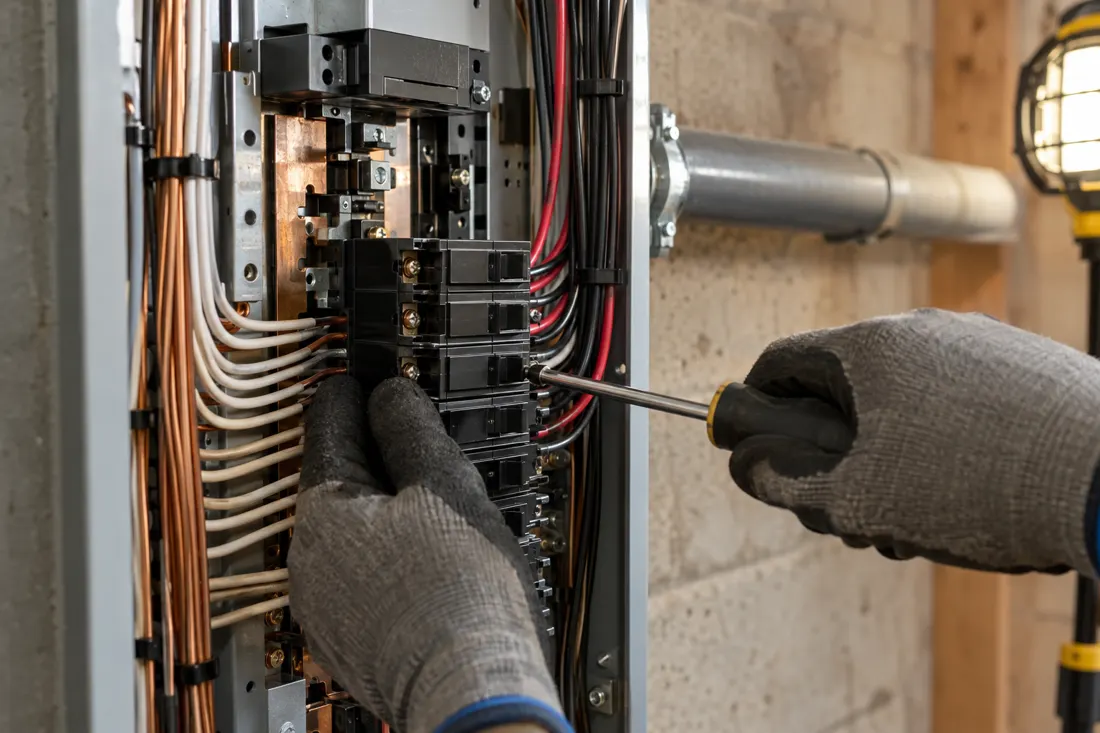
You do not need to buy a faster charger simply to lower the cost per mile. Consider your daily energy needs, available charging time and the installation requirements. If you are weighing a home charger installation, AFDC says some homes may have insufficient electrical capacity for Level 2 and recommends working with a qualified electrician. Electrical work should be done by a licensed electrician, and your local code and permit office determines the requirements.
Compare home charging on equal terms
Use cost per mile or cost for the same driving distance when comparing home charging with another option. Compare the energy cost for the same miles, and use the actual home electricity rate rather than a national average where possible. For a public charging comparison, check the current price shown by the charging provider and use the same distance or energy amount as your home estimate. Pricing can vary by location and provider, so avoid assuming one public price applies everywhere.
Also keep the question focused: a home-energy estimate is not the full cost of owning an EV. It does not include the vehicle, home charger purchase or installation, or other household electricity use. AFDC notes that residential electricity costs depend on the equipment installed and the time and length of charging. Those factors are worth separating from the per-mile electricity calculation so you can tell which part of the comparison is changing.
For a broader look at how public charging charges are structured, see our public EV charging cost comparison. If you want to compare a home estimate against your own schedule and rate, return to the home charging cost calculator. Updating the rate and driving inputs is more informative than relying on a single national-average figure.
FAQ
How do I calculate the cost to charge my EV at home?
Divide miles driven by your EV’s miles per kWh, then divide by charging efficiency to estimate electricity drawn from your home. Multiply that amount by your electricity price per kWh. AFDC also explains the equivalent kWh-per-100-miles method at its home-charging guide.
What is the average cost to charge an EV at home?
Using the June 2026 U.S. residential average of 18.34 cents per kWh, an EV traveling 4 miles per kWh uses about 4.59 cents of electricity per mile before charging losses. Your rate and vehicle efficiency may differ; use your utility bill for a more personal estimate. The average is reported by the EIA.
Should I include charging losses in my estimate?
For a more complete estimate, yes. FuelEconomy.gov says battery charging efficiency is often 84% to 93%, though it varies. Divide the energy the car needs by your chosen efficiency assumption to estimate energy drawn from the home supply, then multiply by your rate. Treat the result as an estimate rather than a precise prediction.
Does charging at Level 2 cost more than Level 1?
Not necessarily. The total energy needed for your driving and the electricity rate are the main cost drivers; Level 2 mainly delivers energy faster. ENERGY STAR reports Level 2 charging is on average 10% more efficient than Level 1, but that is not a guaranteed reduction for every vehicle or setup.
Can charging overnight lower my cost?
It can if your utility offers a lower rate during the hours you charge. Check your utility’s time-of-use schedule and compare the rate for your actual charging window with other periods. AFDC notes that some utilities offer residential time-of-use rates or other incentives, but the details vary by utility.
Sources
- Electric Power Monthly, Table 5.6.A: Average Price of Electricity to Ultimate Customers, U.S. Energy Information Administration
- Electricity: Home Charging, Alternative Fuels Data Center
- Electric Vehicle Technology: Batteries and Charging, FuelEconomy.gov
- Cold Weather Can Affect an Electric Vehicle’s Range, FuelEconomy.gov
- Electric Vehicle Chargers, ENERGY STAR
Written by the HomeCharging.org editors
We build each guide from primary sources: the U.S. Department of Energy, DOT, EIA, ENERGY STAR, the IRS and manufacturer support pages. We do not lab-test chargers or vehicles, and we say so. Numbers link to where they came from. Last checked November 9, 2026. How we research.