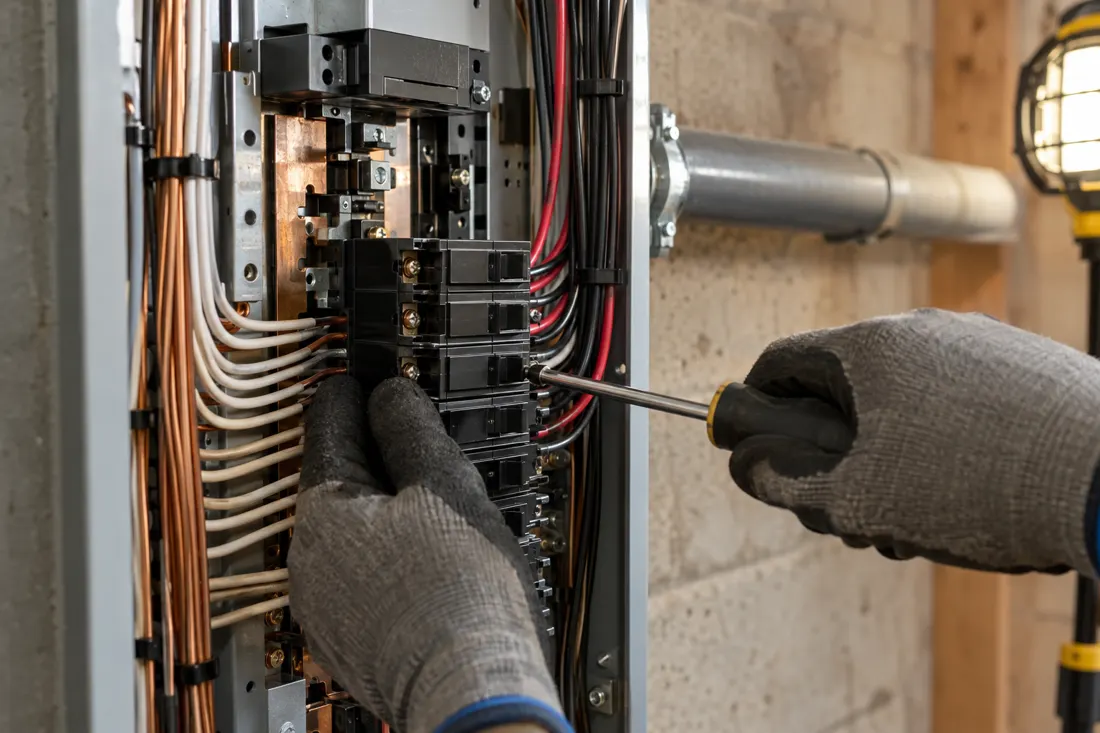
A Level 2 charger needs a dedicated 240 V circuit sized at 125% of the charger's current, so a 48 A charger needs a 60 A breaker. Expect an electrician to check panel capacity, pull a local permit and schedule an inspection. Federal figures put typical residential installation around $1,300 per connector before labor and permitting (AFDC).
Level 1 charging uses a standard 120 V outlet and needs no installation if a dedicated circuit is near where you park (AFDC). Level 2 runs on 208–240 V and adds about 10–20 miles of range per hour, versus 2–5 for Level 1 (DOT). That speed is why most installs are a new circuit, not a new outlet.
EV charger breaker size chart
EV charging draws its full current for hours, so code treats it as a continuous load and sizes the circuit at 125% of the charger's maximum current (NEC Art. 625 summary).
| Charger setting | Circuit / breaker | Power at 240 V | Example in our guide |
|---|---|---|---|
| 32 A | 40 A | 7.7 kW | Smaller panels, shorter commutes |
| 40 A | 50 A | 9.6 kW | Grizzl-E Classic |
| 48 A | 60 A | 11.5 kW | Emporia, Wallbox, Tesla |
| 50 A | 70 A | 12 kW | ChargePoint Home Flex |
Plug-in vs hardwired
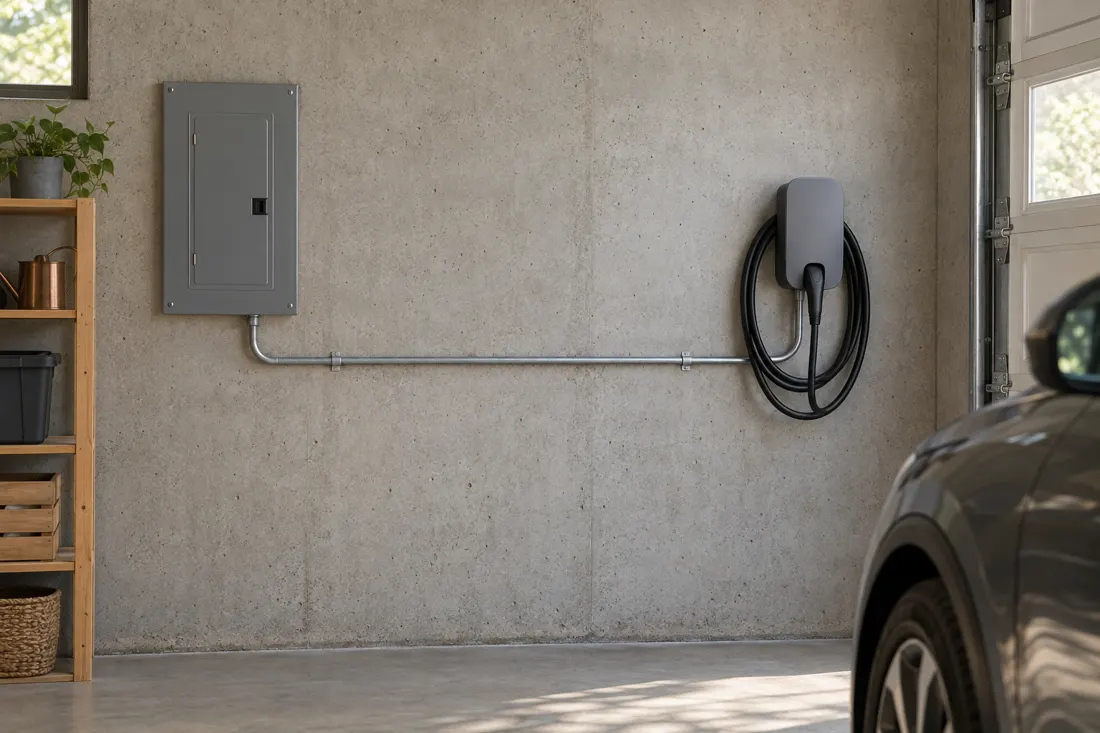
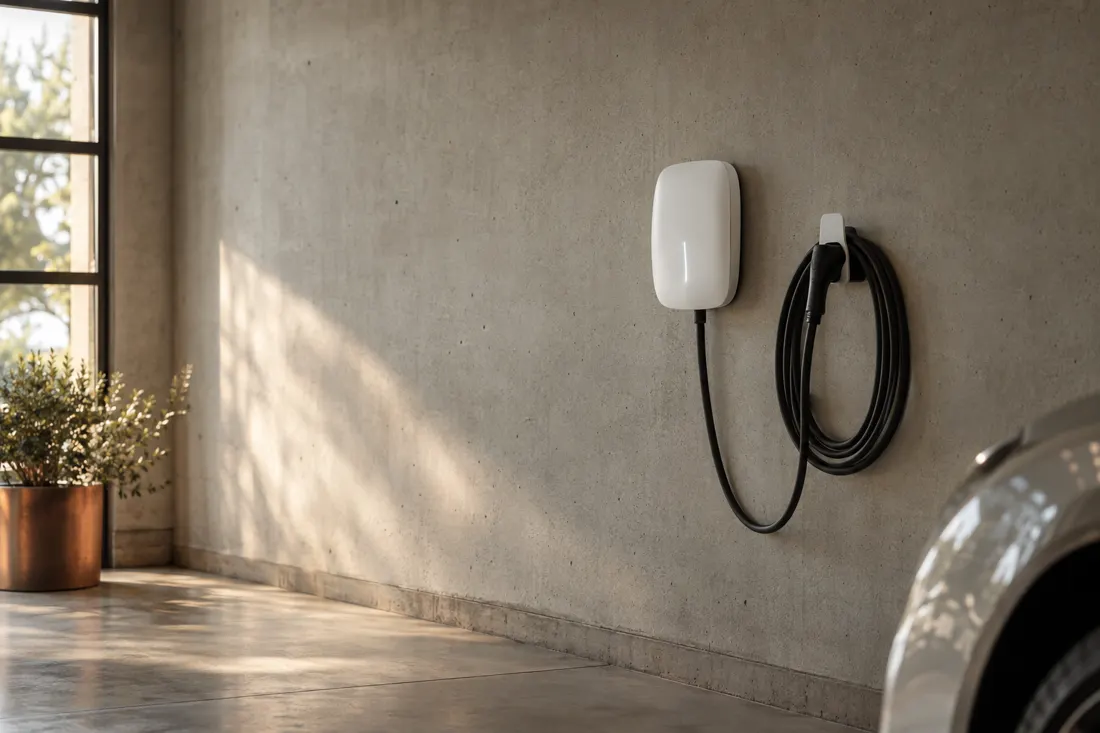
A plug-in charger is easy to take with you when you move and simple to swap. A hardwired charger has no receptacle in the path and is the only option for some units, such as the Tesla Wall Connector. Ask your electrician which your local code and your charger's manual allow at the amperage you want, including any GFCI requirement for receptacles.
Outdoor installs
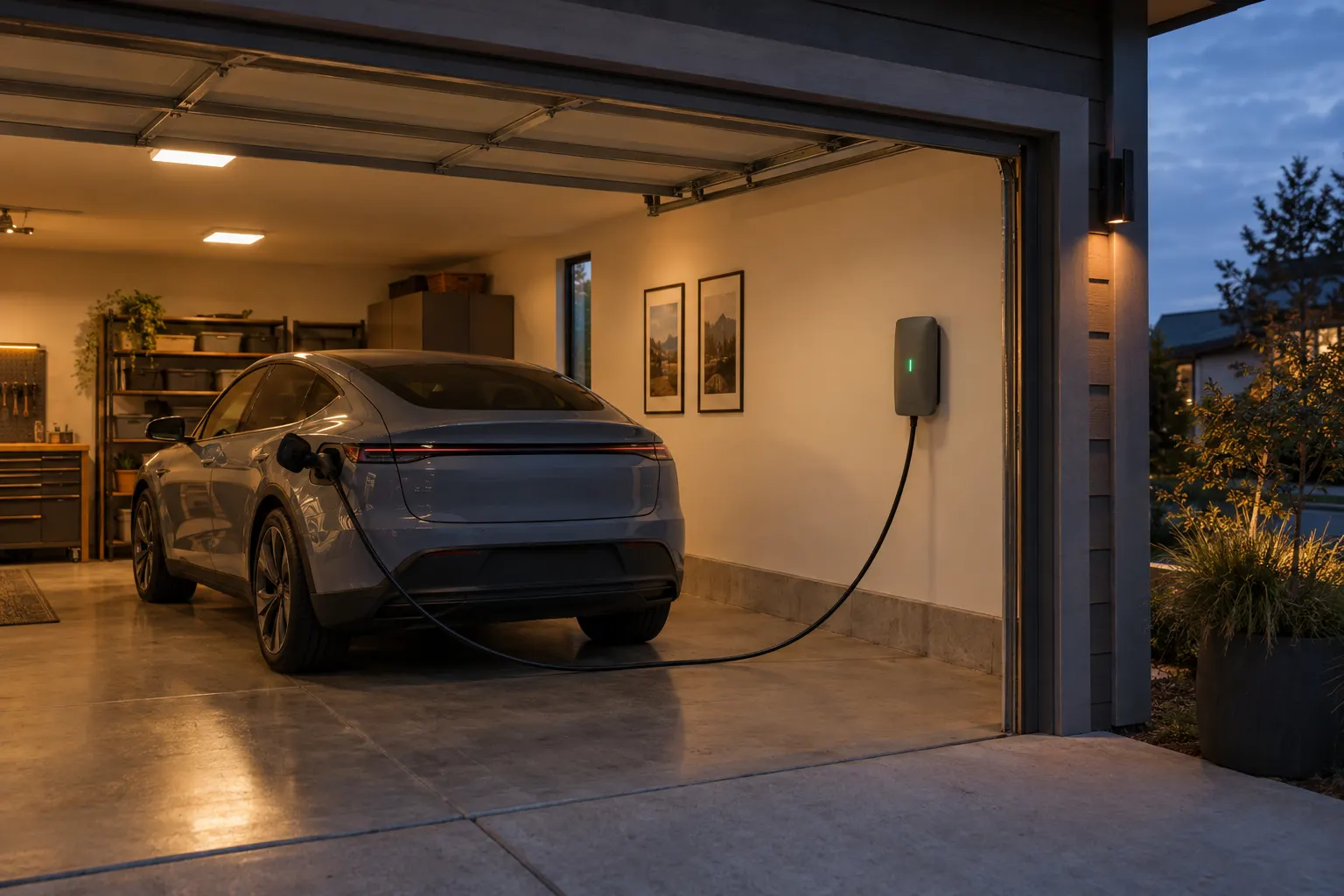
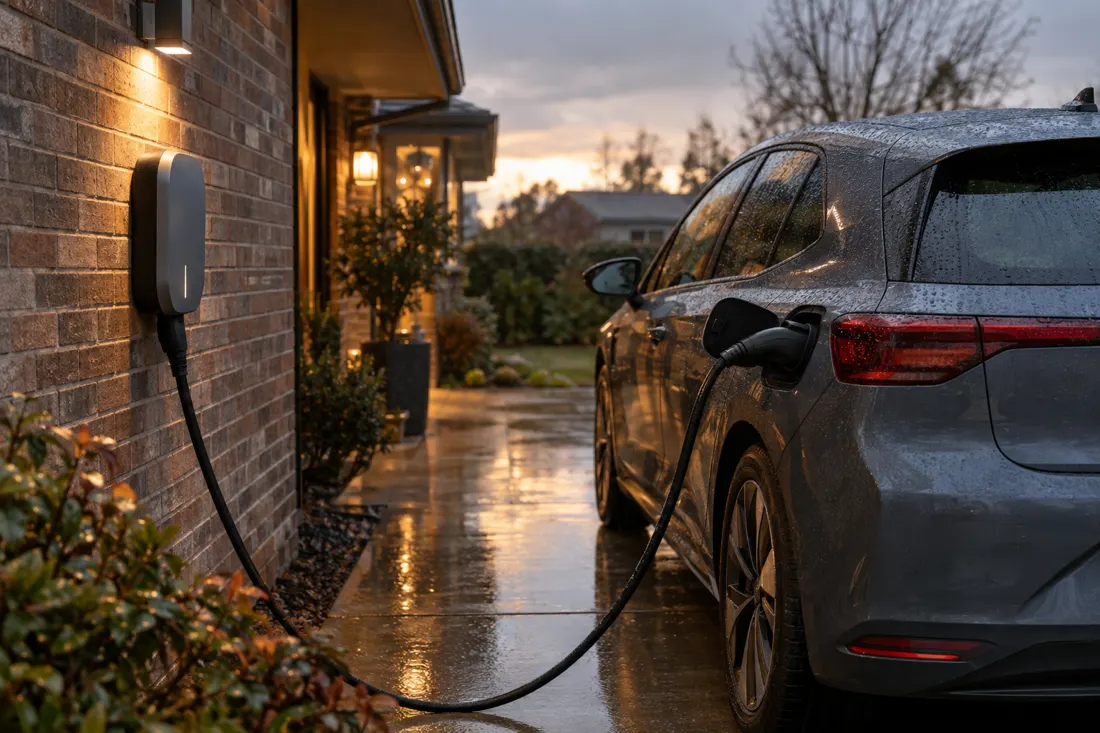
The Department of Energy says outdoor installation and charging, including in the rain, are safe when the equipment is rated for outdoor use (AFDC). Check the charger's enclosure rating and mount it where the cord doesn't cross a walkway.
Cost and rebates
| Item | Federal estimate |
|---|---|
| Residential Level 2 charger (hardware) | $380–$690 |
| Residential Level 2 installation, per connector | ~$1,300 |
| Residential Level 1 installation, per connector | $400–$600 |
The federal 30C credit window has closed
The IRS describes the home charger credit as 30% of cost, up to $1,000 per item, for property placed in service from January 1, 2023, through June 30, 2026, at a main home in an eligible low-income or non-urban census tract (IRS). For new installs, look to your utility and state; the Department of Energy notes state and utility incentives may help offset equipment costs (AFDC).
What it costs to run
At the June 2026 U.S. residential average of 18.34¢ per kWh (EIA), 40 miles a day in a car that gets 3.5 mi/kWh uses about 11.4 kWh, or about $2.10 a day. Plug your own numbers into the charge calculator.
Step by step: from quote to first charge
- Check your car's maximum AC charging rate. It caps what a bigger charger can deliver.
- Pick the parking spot and measure. Cord length and mounting location decide which units fit.
- Get two or three electrician quotes. Ask each for panel capacity, breaker size, wire run and permit included.
- Choose the charger to match the circuit. Use the charger comparison and the chart above.
- Permit, install, inspect. Keep the inspection sign-off for your records and any rebate claim.
- Apply for utility rebates before or after install, depending on the program's rules.
FAQ
Do I need a permit to install a Level 2 charger?
Usually, because it adds a 240 V circuit, but rules are local. Ask your city or county permit office, or have your electrician pull the permit and schedule the inspection.
How much does Level 2 installation cost?
The Department of Energy lists residential Level 2 installation at about $1,300 per connector, a figure that excludes labor and permitting, and the hardware at $380–$690 (AFDC). Panel upgrades and long wire runs add more.
Is the 30C tax credit still available?
The IRS describes the credit for property placed in service from January 1, 2023, through June 30, 2026 (IRS). Equipment installed after that date doesn't qualify under that window.
Can I install a charger myself?
Mounting the unit is simple; the circuit is not. A new 240 V circuit involves your panel, wire sizing and local code, so use a licensed electrician.
Sources
- Developing infrastructure to charge EVs, AFDC, U.S. DOE
- Charging at home, AFDC, U.S. DOE
- Charger types and speeds, U.S. DOT
- Alternative Fuel Vehicle Refueling Property Credit, IRS
- Electric Power Monthly, Table 5.6.A, U.S. EIA
- NEC Article 625 EV charging summary, WireRef
- How to install an outdoor EV charger, The Home Depot
Written by the HomeCharging.org editors
We build each guide from primary sources: the U.S. Department of Energy, DOT, EIA, ENERGY STAR, the IRS and manufacturer support pages. We do not lab-test chargers or vehicles, and we say so. Numbers link to where they came from. Last checked November 9, 2026. How we research.