Disclosure: As an Amazon Associate, HomeCharging.org earns from qualifying purchases. Links below go to current Amazon search results, not fixed prices. More.
Yes, a Tesla Mobile Connector can charge from a suitable NEMA 14-50, 14-30, 6-50 or 5-20 outlet when you use the matching adapter and the outlet is approved for charging by an installer. Tesla lists the NEMA 14-50 and 6-50 at up to 32 amps, while a 14-30 is limited to 24 amps and a 5-20 to 16 amps; actual range added varies by Tesla model. Have a licensed electrician verify the outlet and circuit, and follow local permit and code requirements. Tesla’s Mobile Connector table lists outlet-specific rates.
Which outlet do you have, and what can it do?
A NEMA outlet is a standardized receptacle type. For home EV charging, the shape helps identify which adapter may fit, but it does not by itself prove that the circuit is suitable for regular charging. The breaker, wiring, receptacle condition, installation and charger settings all matter. Tesla says an existing 240 V outlet can be used with the Mobile Connector if an installer approves it for charging use.
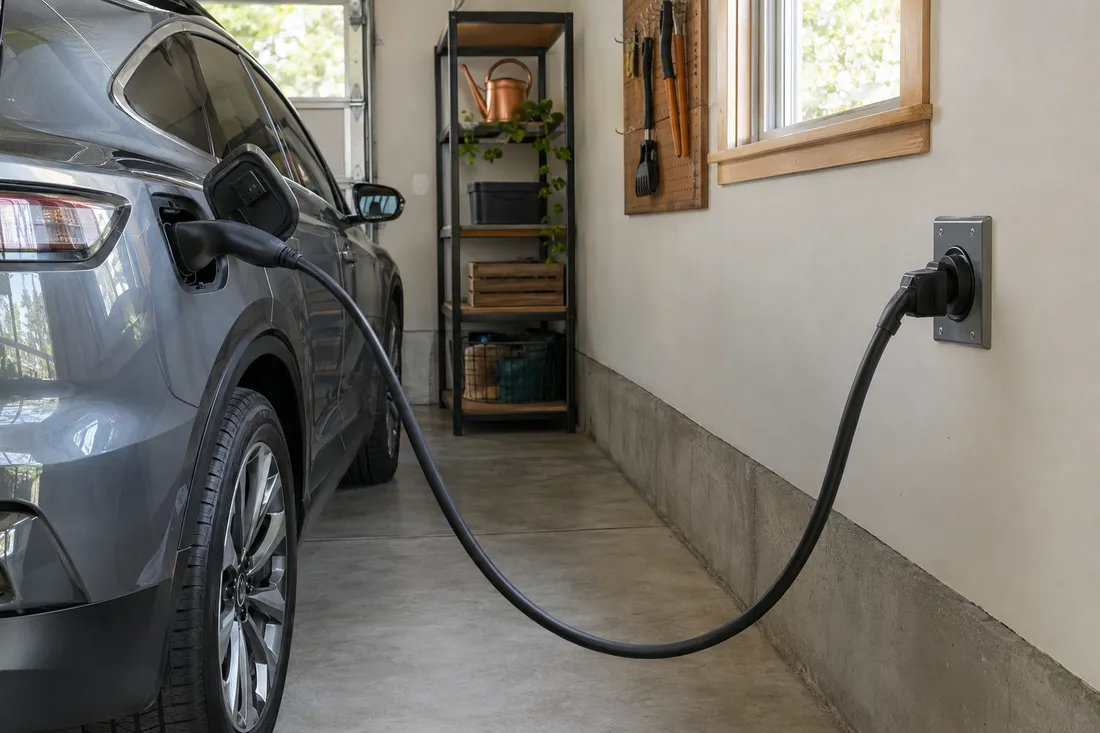
A NEMA 14-50 and a NEMA 6-50 are both 240 V receptacles in Tesla’s Mobile Connector table. The 14-30 is also 240 V, but its listed circuit and charging limit are lower. A 5-20 is a 120 V household outlet, so it adds range more slowly. You need the adapter made for the outlet; do not try to force a plug or use an improvised adapter.
The Mobile Connector is portable, and Tesla lists adapters for different outlet types. Tesla says a standard household outlet can provide up to 3 miles of range per hour, while a 240 V outlet can provide up to 30 miles per hour depending on the vehicle. Use the detailed table below for its model-specific figures rather than treating the top rate as guaranteed. Tesla’s home charging guide explains when an existing outlet may avoid installation.
Tesla Mobile Connector outlet speeds and maximum amps
Tesla’s table gives both a maximum output current and estimated miles of range per hour for each outlet. The range estimates differ by vehicle model, so the same outlet does not add the same number of miles to every Tesla. They are useful for comparing outlet options, not a promise of the precise range you will gain in a particular session.
| Outlet | Listed circuit and maximum output | Model 3 | Model S | Model X | Model Y |
|---|---|---|---|---|---|
| NEMA 14-50 | 240 V, 50 A breaker; 32 A output | 30 mi/hr | 27 mi/hr | 23 mi/hr | 27 mi/hr |
| NEMA 6-50 | 240 V, 50 A breaker; 32 A output | 30 mi/hr | 27 mi/hr | 23 mi/hr | 27 mi/hr |
| NEMA 14-30 | 240 V, 30 A breaker; 24 A output | 22 mi/hr | 21 mi/hr | 17 mi/hr | 21 mi/hr |
| NEMA 5-20 | 120 V, 20 A breaker; 16 A output | 7 mi/hr | 7 mi/hr | 6 mi/hr | 7 mi/hr |
These are Tesla’s stated rates for the Mobile Connector and listed vehicles. Tesla also lists the NEMA 5-15 at 6, 5, 4 and 5 miles per hour for Model 3, S, X and Y, respectively; its 240 V NEMA 6-20 is listed at 15, 14, 12 and 14 miles per hour. A vehicle’s charging behavior and other conditions can affect what you see. For broader context on how charging power and miles added relate, see our guide to EV charging speeds, kW and amps.
Why a 50 A breaker does not mean 50 A charging
EV charging is treated as a continuous load in the National Electrical Code. The branch circuit needs to be sized at 125% of the EV charging equipment’s maximum current. Put another way, the charging current is limited to 80% of the circuit rating for this calculation. A 32 A charging load multiplied by 125% is a 40 A circuit requirement; this is the arithmetic behind the familiar 80% rule. The NEC Article 625 summary explains the sizing principle.
Tesla’s Mobile Connector table pairs a NEMA 14-50 or 6-50 outlet with a 50 A breaker and a maximum 32 A output. That does not mean the connector draws the breaker’s full 50 A. The connector’s listed maximum, the circuit rating and the outlet must all be compatible. For a 14-30, Tesla lists a 30 A breaker and 24 A output, again reflecting the continuous-load sizing principle.
Do not choose a charging current based only on the outlet’s faceplate or breaker label. An existing circuit may have limitations that are not obvious from the receptacle. Have a licensed electrician check the installation and confirm the allowable charging current and any required permit or inspection with your local authority. The U.S. Department of Energy’s home charging guidance notes that charging installations must comply with local and state codes and that permits may be required.
Outlet condition, GFCI and receptacle quality
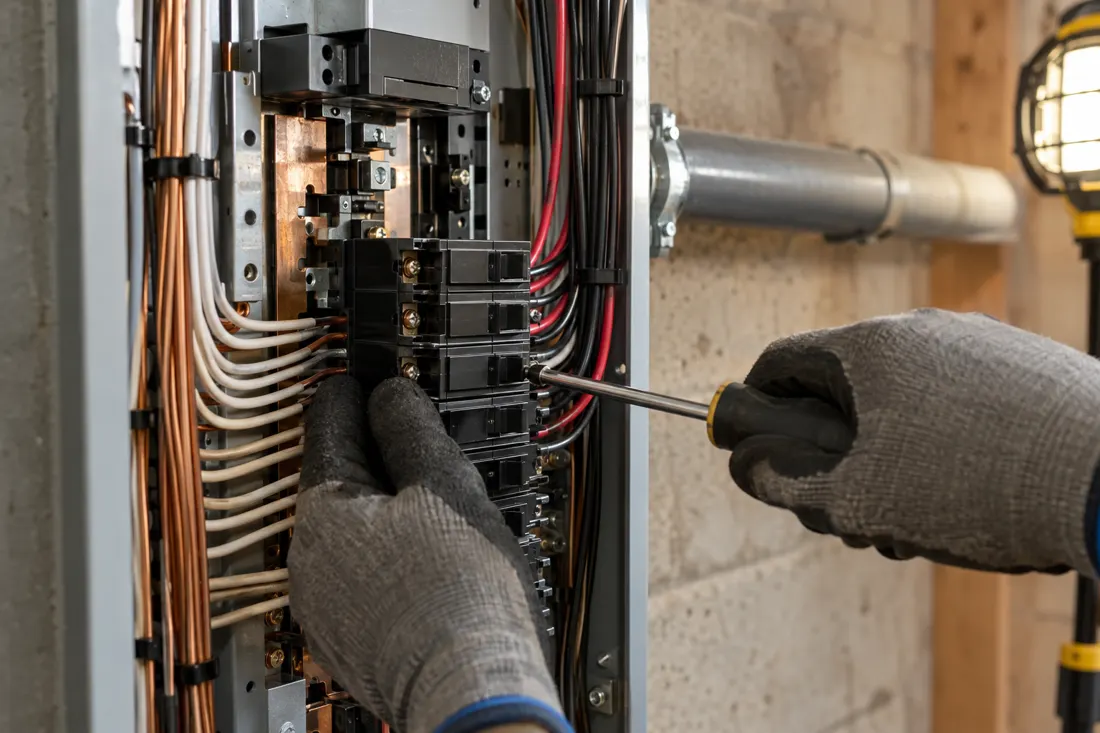
A charging session can last for hours, so the receptacle and its circuit need to be appropriate for sustained EV charging—not merely a close-looking match for the plug. A worn, loose, damaged or incorrectly installed outlet is a reason to pause and ask a licensed electrician to inspect it. Do not open the receptacle, tighten connections or change wiring yourself.
Ask the electrician to verify that the receptacle, circuit and protective devices are suitable under the code that applies at your home. Ground-fault protection requirements can depend on the installation and local rules, so do not assume that every existing outlet has the right protection or that one specific device is always required. The local code and permit office decides what must be approved for your installation.
Pay attention to warning signs while charging. If the plug or receptacle becomes unusually hot, appears discolored, smells burnt, makes a crackling sound or does not hold the plug securely, stop using it and arrange an inspection. Do not rely on an adapter to correct a problem with an outlet or circuit. For equipment, choose safety-certified products; ENERGY STAR says certified EV chargers are tested for safety by a nationally recognized testing laboratory.
If your parking space is outdoors, confirm that the equipment is rated for outdoor use. The DOE says residential charging equipment can be installed and used outdoors, including in rain, when the equipment is outdoor-rated. See the DOE’s home charging guidance for its outdoor-use and installation notes.
Gear for this guide
NEMA 14-50 EV charger
Useful for comparing portable Level 2 chargers, but confirm the product is safety-certified and that your electrician approves the outlet and circuit before buying.
See options on AmazonCheck that any charger or cordset is safety certified (ENERGY STAR lists certified models) and matches your outlet and your car's connector.
Plug-in Mobile Connector or hardwired Wall Connector?
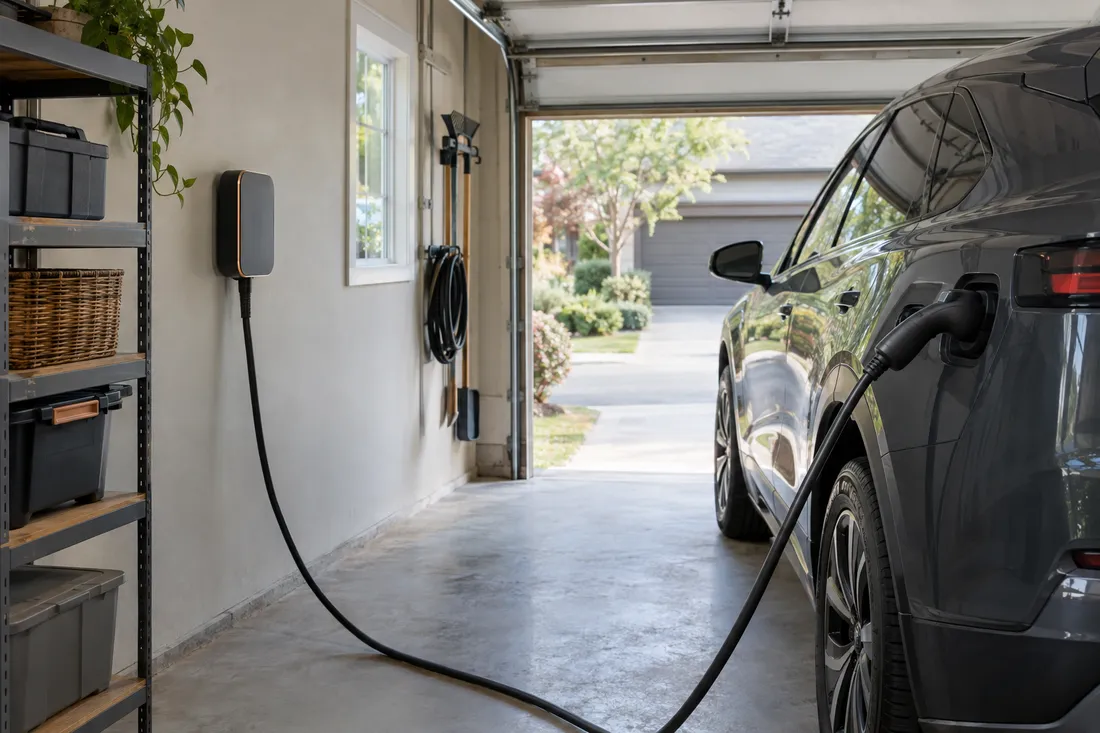
A plug-in setup uses the portable Mobile Connector and a compatible receptacle. It may be a practical option if you already have an outlet at the parking spot and an installer approves it for EV charging. The connector is portable, and Tesla lists a NEMA 14-50 adapter in the current Mobile Connector bundle. Other adapters are available for different outlet types. Confirm the exact adapter supplied with your connector before planning around a particular receptacle.
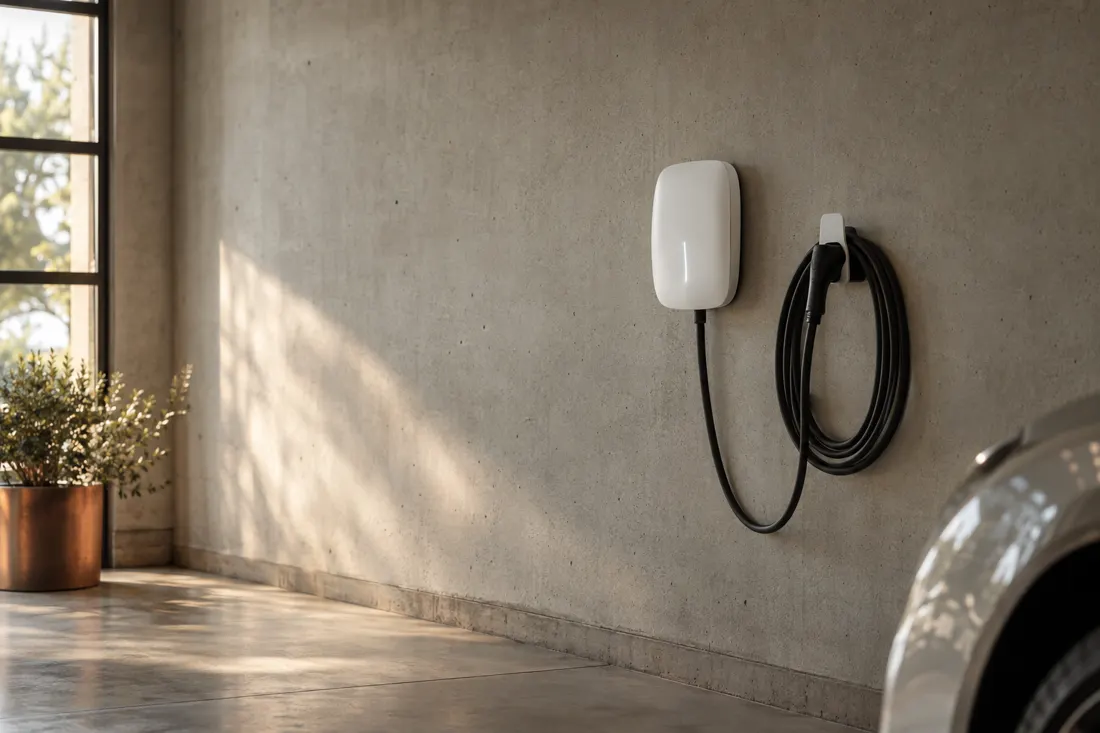
A hardwired Wall Connector is fixed in place rather than plugged into a receptacle. Tesla recommends the Wall Connector as its home charging solution and says it offers functionality not provided by the Mobile Connector, including scheduling and charging statistics. Tesla also says its Wall Connector can be installed on a 40 A circuit with 32 A output; the Mobile Connector with a NEMA 14-50 adapter can be used with a 240 V outlet on a 50 A breaker, also at 32 A output. The vehicle’s charging limit and the installation still matter.
Neither approach is automatically right for every home. An existing, approved receptacle may save installation work; a dedicated hardwired unit may suit someone who wants a fixed charger and its added features. Ask an electrician to quote the complete installation and check what your vehicle can accept. If you are deciding whether Level 2 fits your routine, our Level 1 vs. Level 2 guide compares the two home charging types.
What does a new 240 V outlet cost to install?
If you already have a suitable outlet, Tesla says no installation is required once an installer has approved it for charging. For a new 240 V outlet, Tesla lists an estimated installation cost of $750–$1,500. That is an estimate, not a guaranteed quote: Tesla says costs vary with the home’s electrical system and the type of installation.
The actual work may depend on the route from the electrical panel to the parking location, available electrical capacity and local installation requirements. The fact sheet does not establish a single price for every home, so get a written quote that explains the proposed circuit, receptacle, permits and any other work included. Ask whether the quote covers the permit and inspection or whether those are separate.
The DOE notes that some homes may not have enough electrical capacity for Level 2 charging, and that a qualified electrician can add circuits to accommodate the capacity needed. Local and state rules apply, and permits may be required. Electrical work should be completed by a licensed electrician; your local building or permitting office decides the applicable approval process. For more on the installation process and costs, see our Level 2 charger installation guide.
Consider the cost of the charger separately from the cost of electrical work. The DOE lists a residential Level 2 charger at $380–$690, while its residential installation estimate is approximately $1,300 per connector before labor and permitting. These are broad figures for residential Level 2 equipment and installation, not a quote for a specific outlet or home. The DOE’s infrastructure cost page describes those estimates.
Is a 240 V outlet enough for your daily driving?
For many drivers, the useful question is whether charging during the time the car is parked replaces the energy used in ordinary driving. The Tesla table gives a direct reference: for a Model Y, the Mobile Connector is listed at 27 miles of range per hour from a NEMA 14-50 or 6-50, 21 miles per hour from a 14-30 and 7 miles per hour from a 5-20. Those are Tesla’s estimates, not a guarantee of the exact range you will get.
A 5-20 can add charge if a 120 V outlet is what you have, but it is the slowest of these outlets in Tesla’s table. A 240 V receptacle can provide more charging power, but the outlet and circuit must be correctly installed and approved. Don’t assume you need to fill the battery every night: the right setup depends on your driving, parking time, vehicle and available electrical service.
The DOE says many EV owners can meet daily driving needs by charging overnight with Level 1 equipment when a dedicated branch-circuit outlet is available. It says Level 2 can make sense for less regular schedules, longer commutes or vehicles with larger batteries that need more than the usual parking period to recharge. The U.S. Department of Transportation gives broad estimates of 2–5 miles of range per hour for Level 1 and 10–20 for Level 2; those are general estimates across EVs and equipment, not Tesla Mobile Connector outlet ratings. Compare your specific vehicle’s manual and Tesla’s Mobile Connector table with your routine.
What to check before you plug in
Before using an existing receptacle for EV charging, arrange an inspection by a licensed electrician. Ask them to verify that the outlet, wiring, circuit rating and protective devices are suitable for the intended charger and charging current. Also ask whether a permit or inspection is required locally. The DOE advises consulting manufacturer guidance and says installations must comply with local and state codes.
Then confirm the practical details:
- Match the Mobile Connector adapter to the actual outlet type.
- Check Tesla’s listed breaker and maximum output for that outlet, and do not raise the charging limit beyond what the installation allows.
- Confirm whether the outlet and charger are appropriate for indoor or outdoor use.
- Keep the connector and cable in good condition and stop using damaged equipment.
- Ask the installer what to do if charging interrupts or the vehicle reports an electrical supply issue.
If charging repeatedly stops or does not begin, the outlet is only one possible cause. Tesla has a Mobile Connector diagnostic flow, and our guide to Tesla charging interruptions covers broader troubleshooting. If a charge starts and then stops after a short time, see the more focused guide to charging that stops after a few minutes. Don’t keep using an outlet that shows signs of damage or overheating.
FAQ
Can I charge a Tesla from a NEMA 14-50 outlet?
Yes, if you use a compatible Mobile Connector adapter and an electrician approves the existing outlet for charging. Tesla lists a NEMA 14-50 on a 50 A breaker with a maximum 32 A output. Its estimated rate varies by vehicle, from 23 to 30 miles of range per hour in the listed Model X, S, Y and 3 table. See Tesla’s outlet table.
Does a NEMA 14-50 charge at 50 amps?
No. Tesla lists a 50 A breaker for its NEMA 14-50 setup and limits Mobile Connector output to 32 A. EV charging is a continuous load, and the branch-circuit sizing calculation uses 125% of the maximum charging current; 32 A × 125% = 40 A. The receptacle and circuit must still be checked by an electrician for code compliance.
Can I use a NEMA 14-30 outlet for EV charging?
Tesla lists a Mobile Connector option for a NEMA 14-30 using a 30 A breaker and maximum 24 A output. Tesla’s estimated rates are 22 miles per hour for Model 3, 21 for Model S and Model Y, and 17 for Model X. Use the appropriate adapter, and have the outlet and circuit approved for charging first. Tesla’s table has the model-specific figures.
Is a NEMA 5-20 fast enough to charge overnight?
It can add charge, but it is slower than the 240 V outlets in Tesla’s table. Tesla lists a NEMA 5-20 at a maximum 16 A output and estimates 6–7 miles of range per hour depending on model. Whether that is enough depends on your driving and how long the vehicle is parked. Verify that the outlet is on a suitable circuit and approved for charging.
How much does installing a new 240 V outlet cost?
Tesla lists $750–$1,500 as the estimated cost to install a new 240 V outlet. The actual price varies with the electrical system and type of installation, so request a quote for your home. The work should be done by a licensed electrician, and your local building or permitting office determines whether permits or inspections are required. Tesla’s installation page provides the estimate.
Sources
- Mobile Connector, Tesla
- Home Charging Installation, Tesla
- Charging Your Vehicle at Home, U.S. Department of Energy, Alternative Fuels Data Center
- EV Charging Infrastructure Costs, U.S. Department of Energy, Alternative Fuels Data Center
- NEC Article 625 Summary: EV Charging, WireRef
- ENERGY STAR Certified EV Chargers, ENERGY STAR
Written by the HomeCharging.org editors
We build each guide from primary sources: the U.S. Department of Energy, DOT, EIA, ENERGY STAR, the IRS and manufacturer support pages. We do not lab-test chargers or vehicles, and we say so. Numbers link to where they came from. Last checked November 9, 2026. How we research.